
We Spent 3 Weeks Testing 19 Woodpecker Deterrents to Find the Best Models for 2026
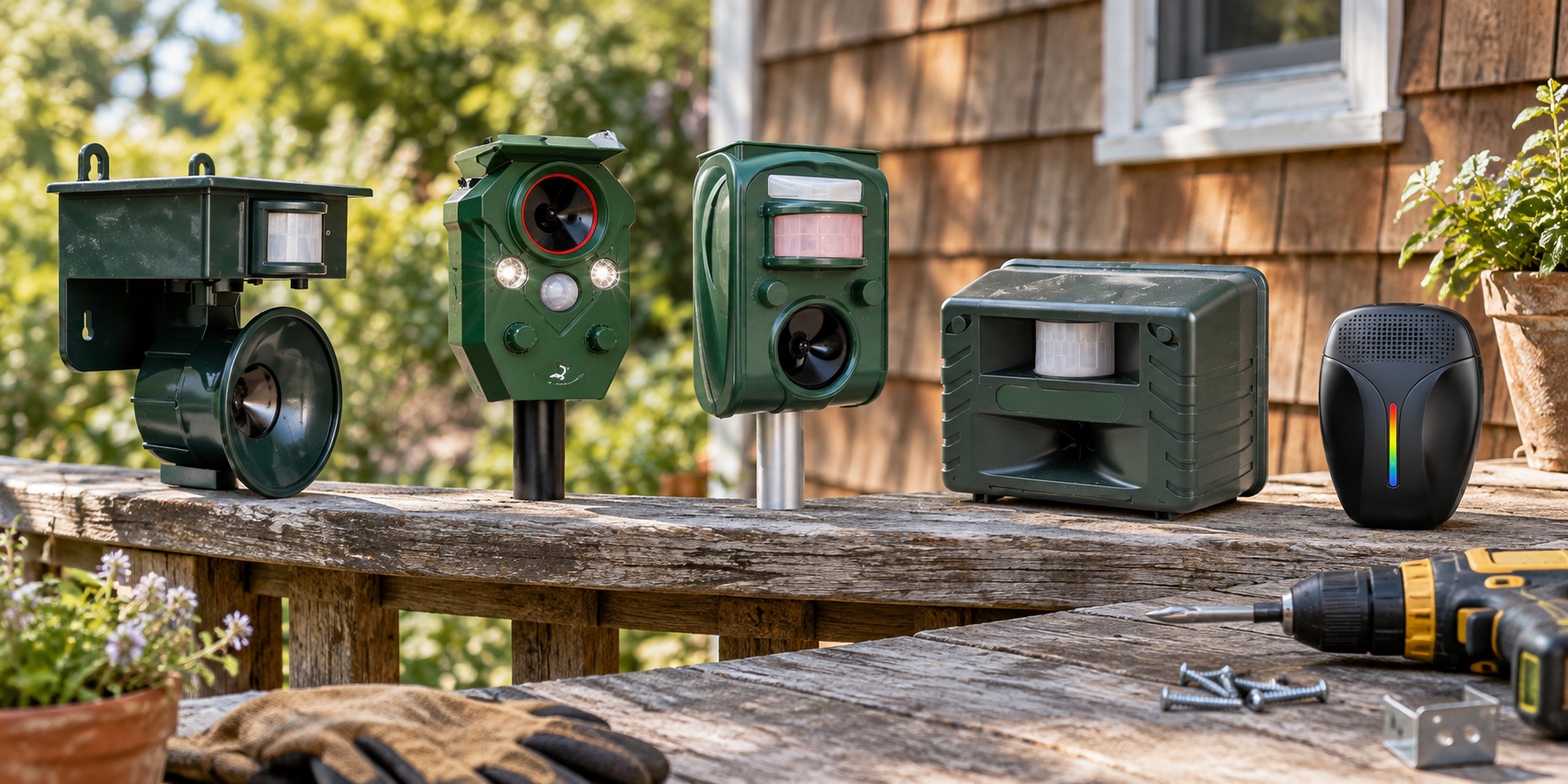
The steady drumming of a woodpecker on cedar siding is more than a nuisance: left alone, it can leave rows of holes that are costly to repair.
Many deterrents disappoint. Some use a single sound that birds quickly learn to ignore, while others have weak batteries or flimsy housings that fail outdoors.
Over three weeks, we compared 19 woodpecker deterrents against the standards below. Here are the five that ranked highest for 2026.
Our Evaluation Standards
Deterrent Effectiveness
How well the sounds, lights and motion triggers are designed to keep woodpeckers away from your home.
Durability and Weatherproofing
Build quality and weather ratings for long-term outdoor use.
Power Efficiency
Solar charging and battery capacity for protection through cloudy days and nights.
Ease of Installation
Mounting options and how quickly the device can be set up.

Ethan R – Outdoor Property Protection Specialist
With over 14 years of experience in outdoor property maintenance and home protection equipment, Ethan specializes in reviewing practical deterrent devices, exterior maintenance tools, and garden technology. His focus is on comparing ease of installation, weather resistance, durability, and everyday usability, helping homeowners understand the features that matter when protecting siding, roofs, decks, and outdoor structures. He's passionate about finding straightforward solutions that make property upkeep simpler and more manageable.
1. PeckAway Woodpecker Deterrent
from PeckAway
Overall Grade
A+
Rating
9.8/10
Overall Analysis
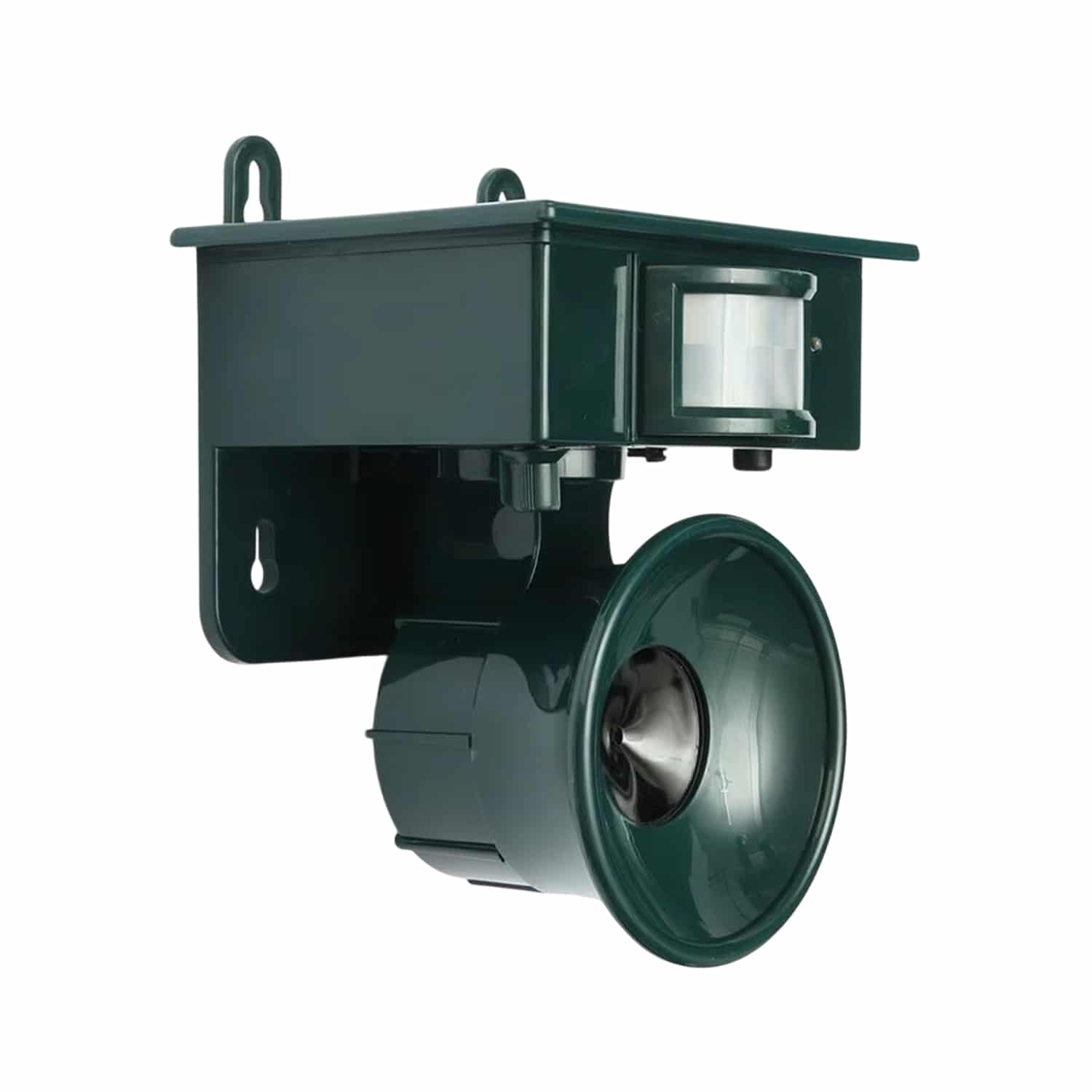
The PeckAway Woodpecker Deterrent is our top pick. It's a compact, solar-powered ultrasonic unit with a motion sensor, built to discourage woodpeckers from drilling into siding, eaves and fences without chemicals or traps.
Its housing is made from ABS plastic, which the seller says holds up in both summer heat and freezing weather.
The solar panel charges during the day so the unit can keep running overnight. The seller quotes a 98% energy-conversion rate; treat that as a manufacturer claim rather than an independent measurement.
Because it's small, it mounts discreetly on a wall, fence or post and covers a 180-degree field in front of the sensor. Mounting hardware is included, and setup doesn't require special tools.
Results will depend on placement and how established the birds' habits are, so position it facing the spot where the pecking happens.
Pros
 Durable ABS housing
- Solar powered, no running costs
- Compact, discreet design
- Mounting hardware included, no special tools
- Weather-resistant for outdoor use
- Designed for several bird species
- Chemical-free
Cons
 Often out of stock due to demand
Wrap-Up
The PeckAway Woodpecker Deterrent ranks first for its sturdy build, solar power and straightforward installation. Stock can be limited, so check availability early.
2. X-PEST Woodpecker Deterrent
from X-PEST
Overall Grade
B+
Rating
8.7/10
Overall Analysis
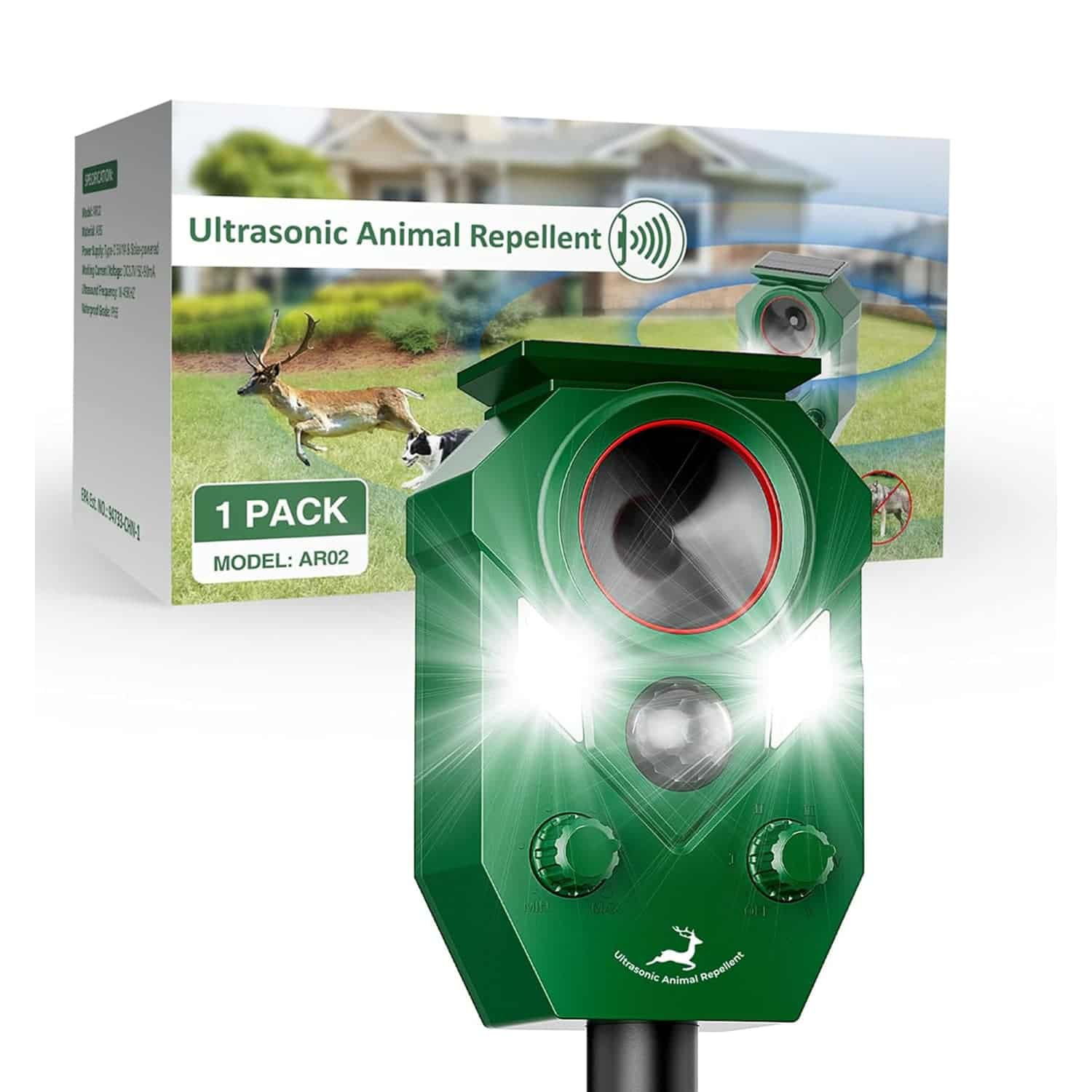
X-PEST combines ultrasonic sound, LED flashes and an alarm, which makes it a versatile choice if you live near woodland and deal with several kinds of wildlife.
Five adjustable frequency settings let you rotate the output so local birds are less likely to get used to one sound.
It's sealed against rain and snow, runs on solar power with a battery backup, and its motion sensor is rated to about 25 ft.
A stake mount pushes into soil or garden beds, so you can move it around the property as problem spots change.
Pros
- Ultrasonic, light and alarm deterrents
- Five adjustable frequencies
- Solar with battery backup
- Weatherproof design
- Tool-free stake installation
- Motion detection up to 25 ft
- Easy to reposition
Cons
- Needs direct sunlight to charge well
- Smaller coverage than premium models
3. Broox Woodpecker Deterrent
from Broox
Overall Grade
B
Rating
8.1/10
Overall Analysis
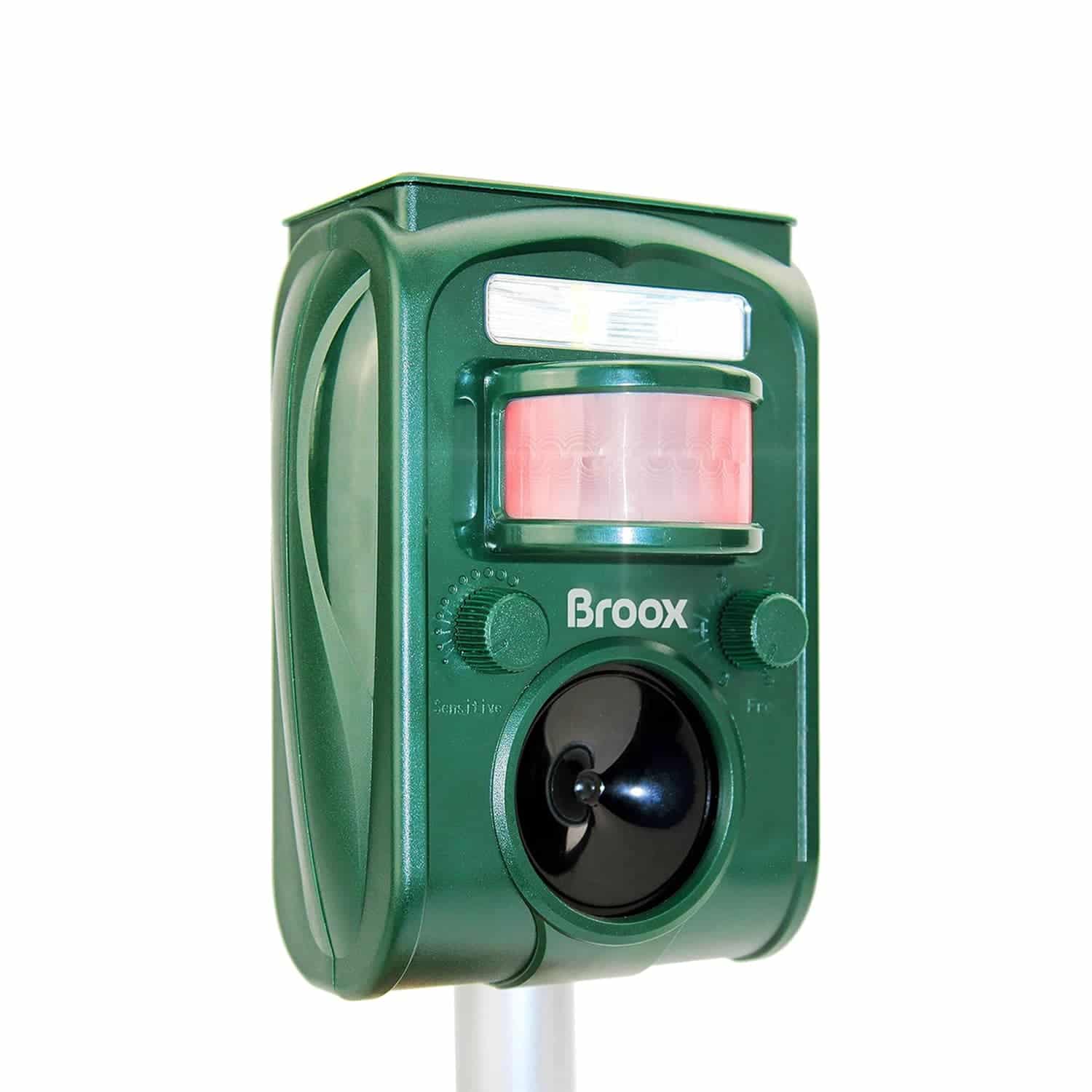
Broox stands out for its 35 ft motion-detection range, so it can switch on before birds settle into a pecking rhythm on your siding.
An upgraded solar panel is described as charging even under cloud cover, which helps in regions with limited sun.
It emits randomized frequencies to reduce habituation, and can be mounted on a wall or fence or set in the ground with the included stake.
Pros
- 35 ft motion detection
- Lightweight and simple to install
- Solar panel charges in cloudy weather
- Randomized frequencies
- Weather-resistant
- Multiple mounting options
Cons
- LED lights dimmer than premium models
- Sensitivity can be fiddly to adjust
- Alarm mode may bother close neighbors
4. ASPECTEK Woodpecker Deterrent
from ASPECTEK
Overall Grade
C+
Rating
7.5/10
Overall Analysis
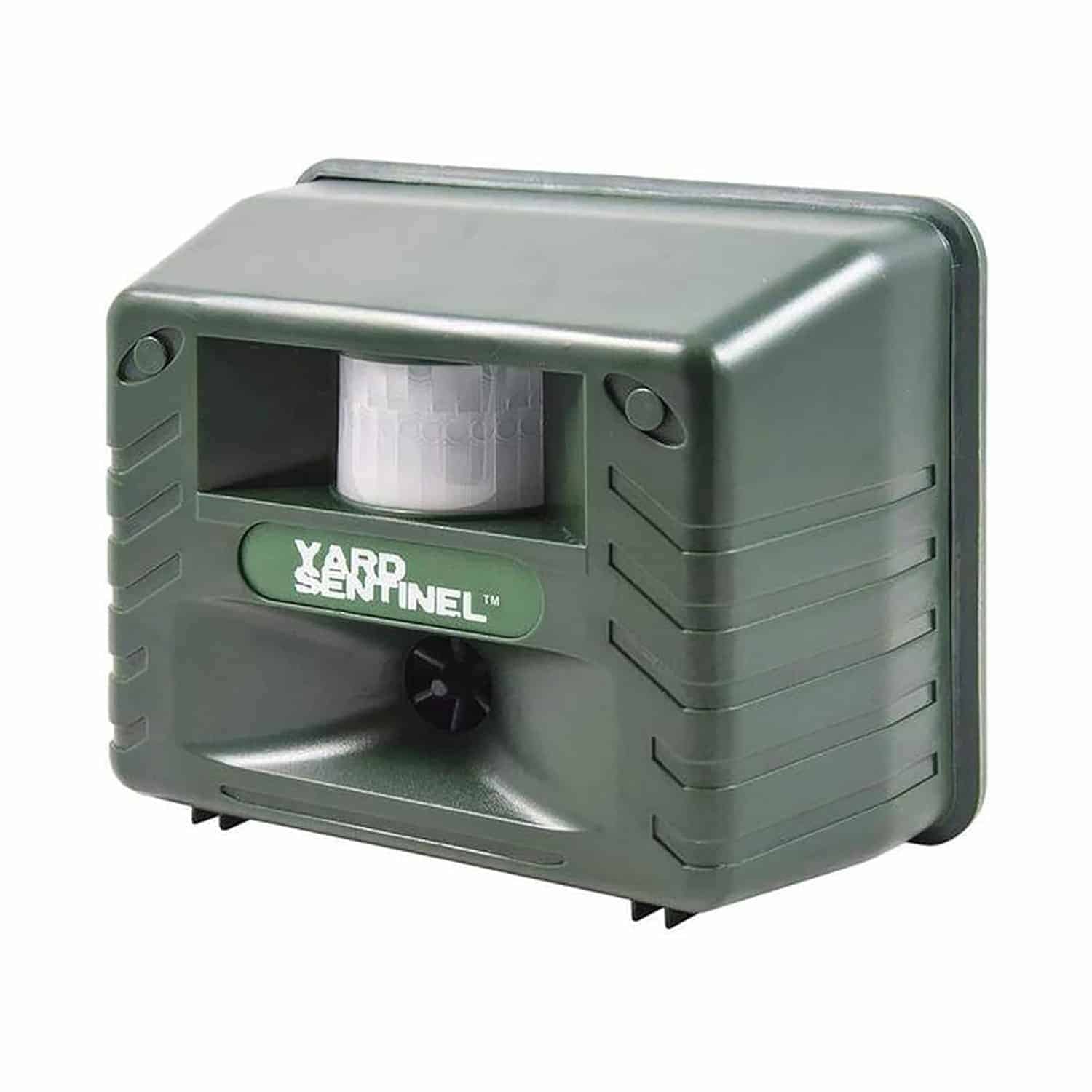
ASPECTEK is aimed at larger properties. Its frequency-cycling system moves through different ultrasonic ranges automatically.
The housing uses UV-resistant materials so it doesn't turn brittle or fade after long sun exposure.
The manufacturer states coverage of about 1,300 sq ft per unit, which can reduce how many devices you need.
The original review lists solar power with a rechargeable battery backup for round-the-clock operation; check the current listing for the exact power options.
Pros
- Automatic frequency cycling
- Weatherproof, UV-resistant build
- About 1,300 sq ft coverage (manufacturer figure)
- Backup power for continuous operation
- Sturdy construction
- Installation accessories included
Cons
- Heavier, needs secure mounting
- Higher price than basic models
- Motion detection less sensitive in rain
- Setup takes some time at first
5. Haycone Woodpecker Deterrent
from Haycone
Overall Grade
C
Rating
7.1/10
Overall Analysis
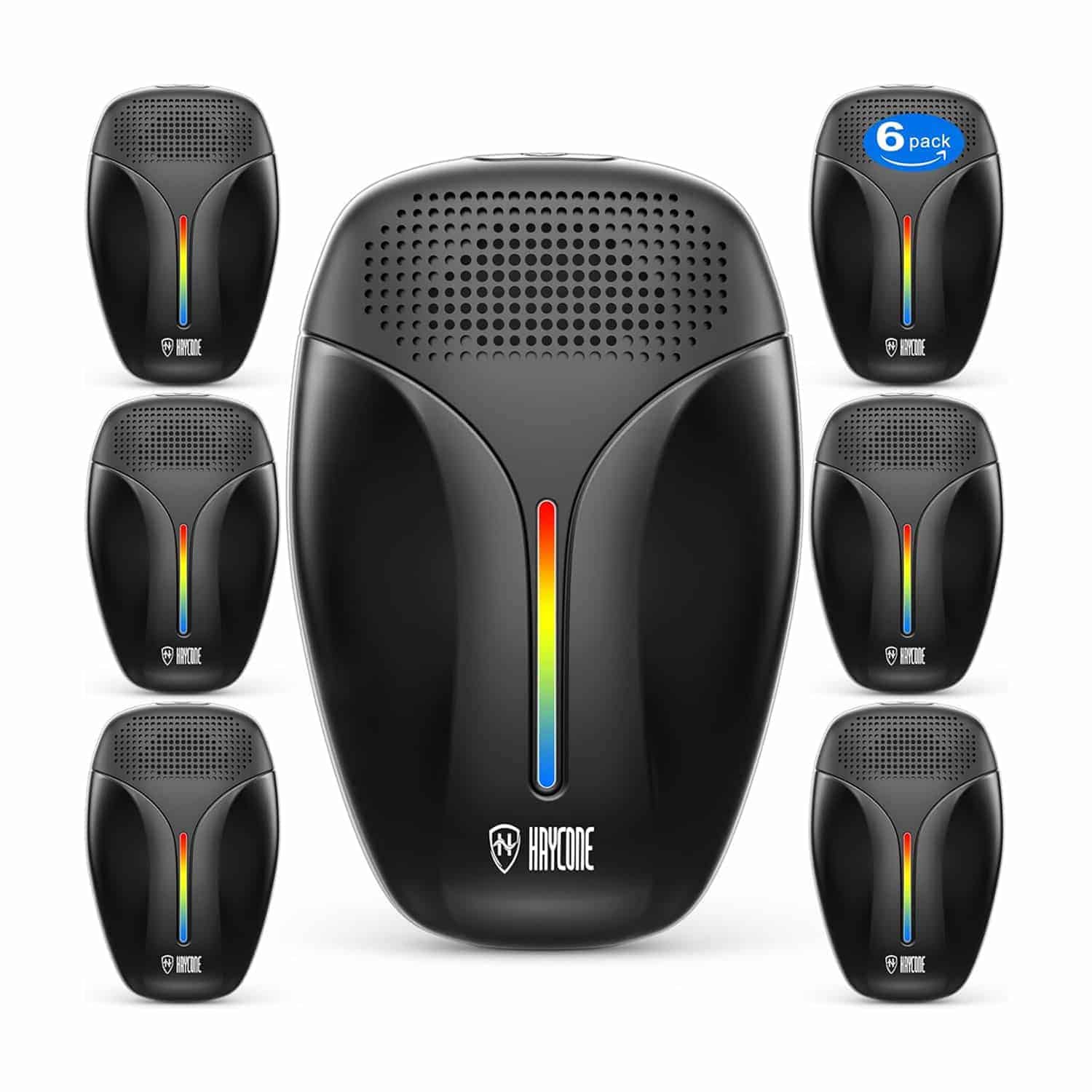
Haycone is a simple, affordable entry point. Its three-mode system lets you choose the deterrent intensity.
The compact unit suits small patios, balconies or a single problem area, and is described as energy efficient between charges.
Setup needs no tools. Its weather resistance is basic, so it's better suited to sheltered spots than harsh climates.
Pros
- Three selectable modes
- Easy setup for first-time users
- Affordable
- Compact design
- Energy-efficient operation
Cons
- Smaller coverage than premium models
- Less effective against larger animals
- Basic weather resistance
- Limited mounting options
- Activation can be slightly delayed
What Is a Woodpecker Deterrent?
Woodpecker deterrents are devices that humanely discourage birds from drumming on or drilling into wooden structures. They use ultrasonic sound, flashing lights or physical barriers to make an area feel uncomfortable or unsafe to the birds.
Their purpose is to protect homes, fences and trees from damage without harming wildlife.
Most modern units are solar powered and use motion sensors, so they only activate when something approaches.
Combining sound and light, and varying the pattern, helps stop birds from getting used to the device and returning to the same spot.
Benefits of a Woodpecker Deterrent
- Helps prevent damage to cedar, stucco and other siding
- Can save on repair and repainting costs
- Humane — no chemicals or traps
- Solar models need no wiring
- Helps keep your home's exterior looking its best
- Low maintenance once installed
- Works on houses, barns, fences and trees
- Cuts down on the noise of repeated drumming
Things to Consider When Choosing a Woodpecker Deterrent
Detection range
How far away the sensor can pick up approaching birds.
Power source
Solar panels with battery backup keep the unit running on cloudy days.
Mounting flexibility
Lets you place the device exactly where the damage happens.
Frequency settings
Varied sounds help stop birds getting used to the deterrent.
Weatherproofing
A good rating helps the device survive rain, snow and summer heat.
Coverage area
How much of your property a single unit protects.
Visual deterrents
LED lights add another layer of protection at dawn and dusk.
What to Avoid When Choosing a Woodpecker Deterrent

Low-quality plastic
Cheap housings can turn brittle and crack after a season in the sun.
Small batteries
Too little capacity can leave the device off overnight.
Poor placement
Branches or architectural features can block the sensor.
Single-frequency devices
Birds can learn to ignore one repeated sound.
Ignoring weather ratings
Poorly sealed units can be damaged in the first heavy storm.
Ethan R – Outdoor Property Protection Specialist
With over 14 years of experience in outdoor property maintenance and home protection equipment, Ethan specializes in reviewing practical deterrent devices, exterior maintenance tools, and garden technology. His focus is on comparing ease of installation, weather resistance, durability, and everyday usability, helping homeowners understand the features that matter when protecting siding, roofs, decks, and outdoor structures. He's passionate about finding straightforward solutions that make property upkeep simpler and more manageable.